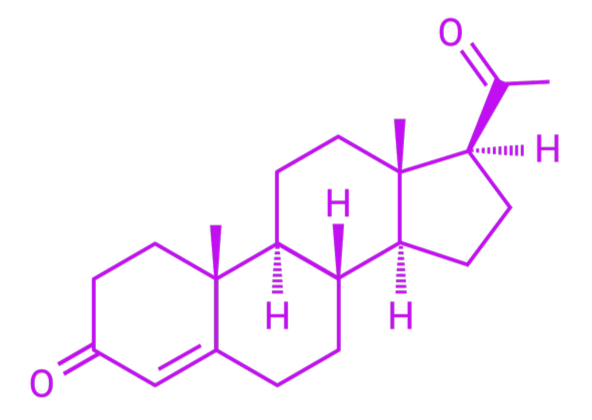
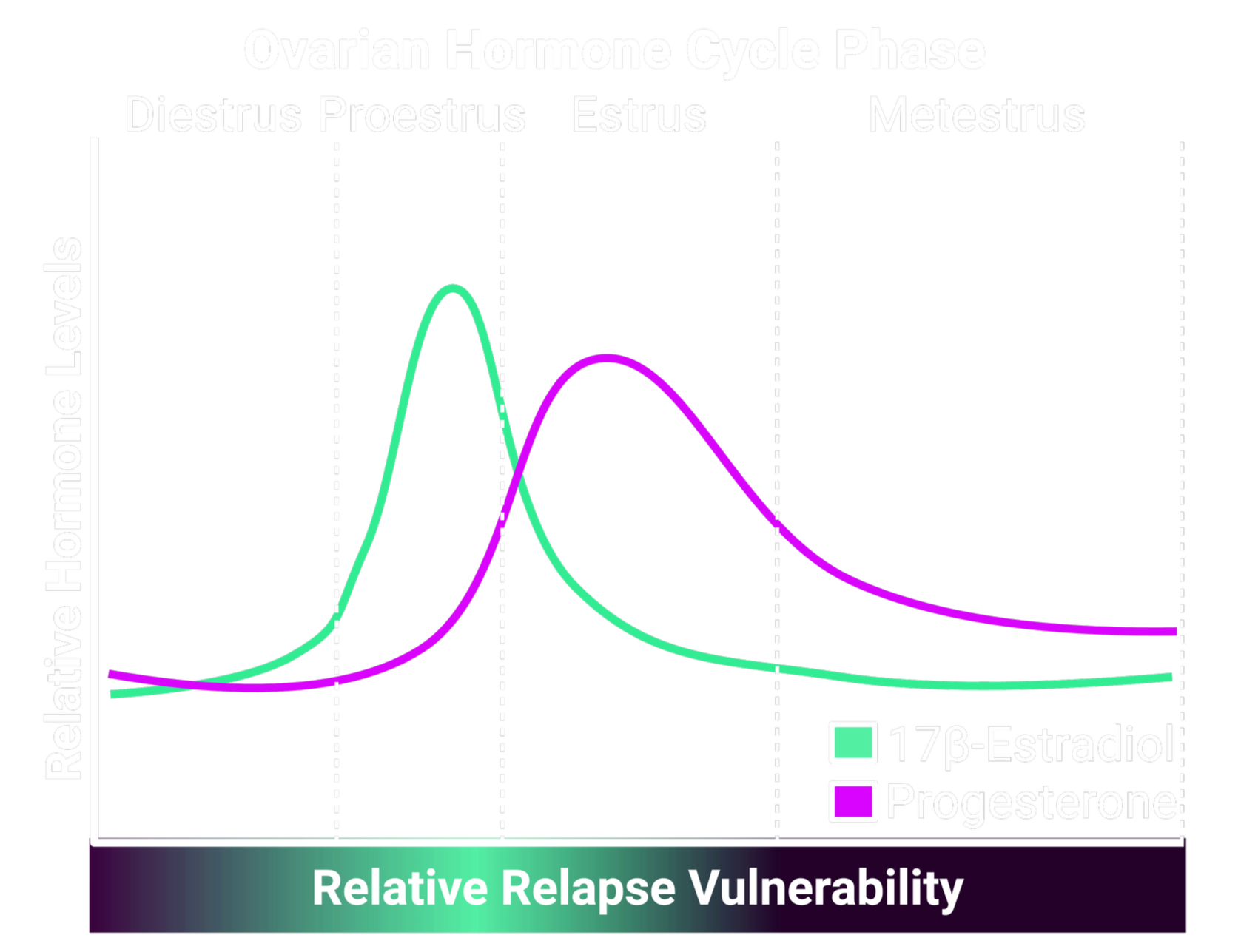
Progesterone suppresses relapse vulnerabilty.
Clinical and preclinical studies imply that elevations in circulating levels of progesterone suppress relapse vulnerability in females. Research in the lab aims to unravel the signaling mechanisms and impacts on neural activity dynamics through which progesterone exerts its protective effects, including those exerted by its metabolite allopregnanolone.
Moreover, we aim to identify whether these naturally occurring phenomena observed in females can be also co-opted to provide relapse protection for males. By revealing how these neuroactive steroids regulate neural activity and drug seeking in females, we may reverse-engineer treatment discovery for males— flipping the script on historically male-dominated research.
Finally, as progesterone and 17beta-estradiol appear to have opposing influences over relapse susceptibility, ongoing studies aim to resolve whether their mechanisms are directly opposed or independent of one another.